
Why Sewer Districts Matter: Infrastructure That Lifts Communities
In the world of underground construction, we often focus on the how — how to trench safely, how to install lift stations, how to directional drill beneath wetlands or roadways. But sometimes, it’s worth revisiting the why. Why do we invest in centralized sewer systems at all? Why do communities form sewer districts?
The answer, simply put: because when designed, funded, and maintained properly, sewer districts raise the quality of life, protect natural resources, and create economic opportunity.
🚧 What Is a Sewer District?
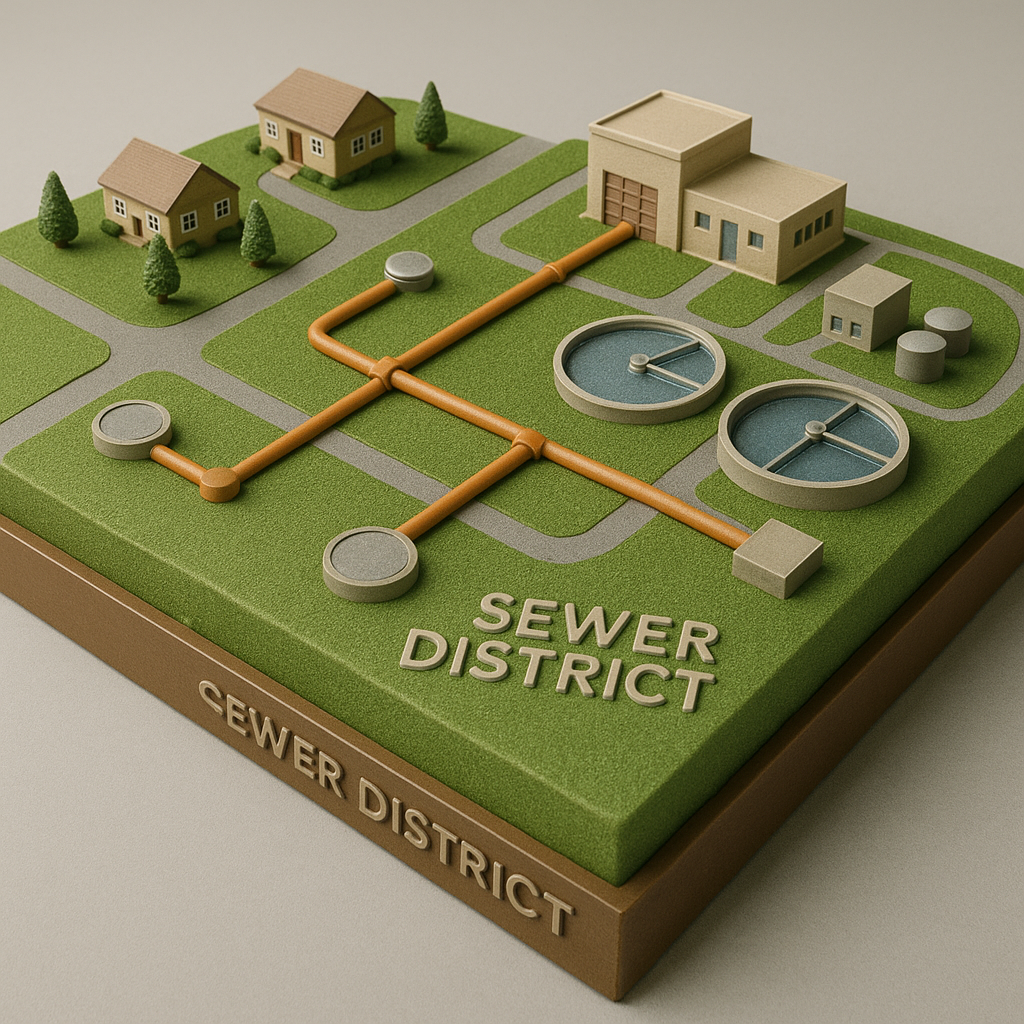
A sewer district is a special-purpose local government or utility entity created to manage wastewater collection and treatment services for a defined area. These districts often operate independently from town or county governments, with their own boards, funding mechanisms, and service boundaries.
Manage centralized sewer systems
Oversee grinder pump installations for low-pressure sewer networks
Operate lift stations and small treatment plants
Coordinate grants and funding from state/federal sources (e.g., SRF, USDA, ARPA)
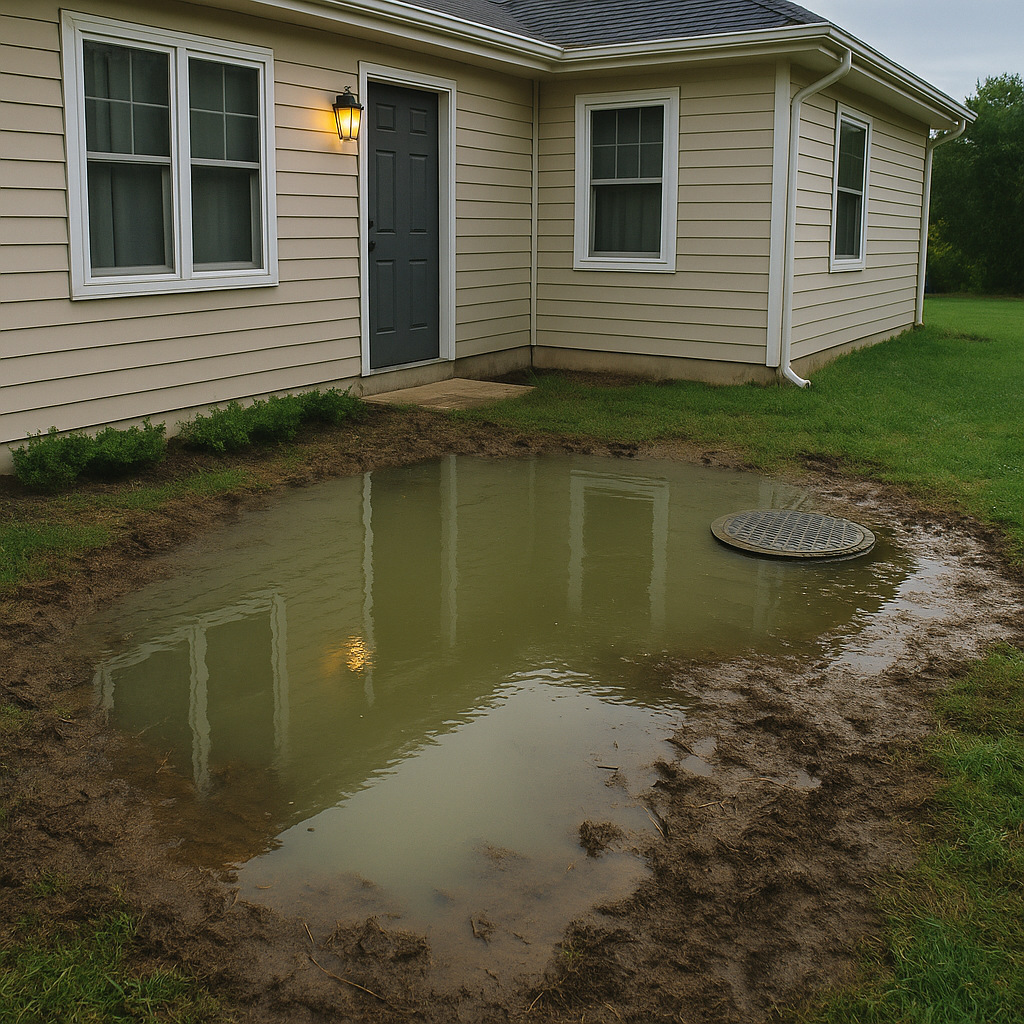
Standing water from a failed septic system
🧪 The Problem with Septic in 2025
Failing septics in older subdivisions with small lots and poor drainage
High nitrate levels in well water due to leaching from septic systems
Increased density in lake communities without the infrastructure to support it
Limited room to install new septic mounds when old systems fail
Decreased home values in areas plagued by recurring septic issues
💧 The Benefits of a Sewer District
1. Protecting Drinking Water & Natural Resources
Sewer systems prevent untreated wastewater from leaching into groundwater or running off into lakes, rivers, and wetlands.
2. Increasing Property Values
Homes connected to reliable sewer systems command higher values — period.
3. Enabling Smart Growth
Sewer districts make it possible for communities to grow responsibly.
4. Tapping Into Grant Funding
Districts can access federal and state infrastructure funds that individuals or even counties cannot.
5. Centralizing Operations & Maintenance
Instead of hundreds of individual septic tanks, you have a unified system with professional oversight.
🏗️ Contractors Like Us Are the Boots on the Ground
At Haskins Underground, we’ve seen firsthand the transformation sewer districts bring. We're not just digging trenches — we’re building the infrastructure that keeps communities safe, healthy, and growing.
📣 Final Thoughts
The formation of a sewer district isn’t just a bureaucratic step — it’s an act of community preservation. They are how we move from "reacting to problems" to "planning for the future".
Sewer districts are the backbone beneath our streets. Quiet, buried — but essential.